My pedagogy is rooted in immersive and experiential learning, project-based learning, and mentorship.
My teaching interests traverse the bridge between science and culture, exploring the relationships between the environment, the arts, and justice. Current courses in my rotation—all seminars capped at 25 students—include:
- Art, Nature and Climate Change
- Beyond Human/Nature: The Cultural Side of Environmental Issues
- Writing Material Culture
- America’s Role in the Global Environment
- Environmental Humanities
Included below are descriptions of some of these courses as well as comments from student evaluations highlighting pedagogical choices and strengths. Syllabi available upon request.
I truly loved this course and Professor Bridges. I thought the course material was super interesting and well–structured and engaged a new part of my brain. I really enjoyed just learning the basic concepts and terminology of folklore, alongside applying those notions to various art forms. Professor Bridges truly made the course though. He was incredibly engaging and knowledgeable, great at answering students’ questions and creating a supportive classroom environment, and overall just an amazing human being! I would recommend this course to anyone.
-Student evaluation from “Art, Nature, and Climate Change” in Fall 2025
Art, Nature, and Climate Change
This course will draw from folkloristic and anthropological theories and methods to explore how people turn to their artistic expressions—such as storytelling, painting, cooking, weaving, and more—to understand, react, and adapt to climate change and related environmental issues, ranging from natural disasters to controversial land management policies. Through a variety of student-curated salons, we will consider how humans exercise their cultural traditions to protest, cope with, critique, and endure ecological crises. In doing so, we will also investigate many of the identities and institutions that shape not only who is affected by environmental disasters, but also how cultural expressions can perpetuate or challenge social inequities. By attending to the intersection of art and climate at a geographically expansive scale, the course connects the local to the global and invites students to consider how environmental changes and creative expressions manifest in disparate cultural contexts.
While the class was primarily discussion-based, when there were lectures, Dr. Bridges was an incredibly engaging lecturer who made concepts and terms easily digestible. He used a lot of metaphors and examples to convey ideas, as well as incorporated activities into his lectures, which made them more intriguing and fun. He was also just a nice guy overall, and I appreciated his energy; I always looked forward to class.
-Student evaluation from “America’s Role in the Global Environment” in Spring 2025

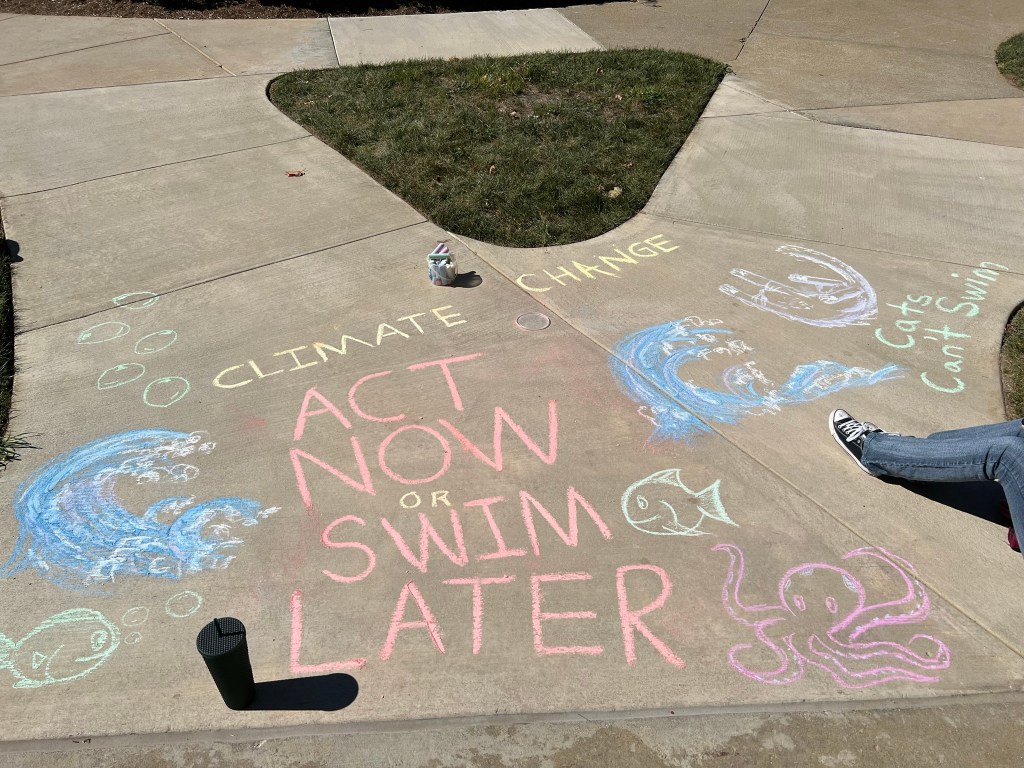
Beyond Human / Nature: The Cultural Side of Environmental Issues
Climate change and natural disasters are not purely environmental issues: they are fundamentally tied to political and economic activities deeply rooted in cultural understandings of the relationship between humans and nature. In this introductory environmental social science course, we will explore ecological problems by considering how ideologies, ethics, and cultural assumptions shape the ways humans interact with plants, animals, and landscapes. In doing so, we will unpack a foundational dichotomy of our time—are humans separate from the natural world, or part of it? By consulting scientists, social scientists, and artists, students will untangle this nature-culture relationship, tapping into key existential questions about what it means to be humans who not only live in this world, but who seek to solve the environmental problems that they have caused or exacerbated.
“Dr. Bridges was an excellent facilitator throughout the course and pushed us to engage deeply with the material. He selected texts which were diverse in their focus but cohesive in their connections, and put together an excellent slate for us to read over the course of the semester. He was also deeply accommodating when difficulties arose, and deeply concerned with the wellbeing of his students both in and out of class.”
-Student Evaluation from “Writing Material Culture” in Spring 2025


“Professor Bridges was always very welcoming, offering to help whenever needed, and open to the feedback that was given to him. He listened and cares deeply about his students, and about the content he teaches, making his classes interesting and educational. He pushed for students to participate in class and always made his classes interactive. He always strived to help students out it times of need and was an overall excellent teacher!”
-Student Evaluation from “Beyond Human/Nature” in Fall 2024
 Ben Bridges