My primary research fields include environmental humanities, material culture and heritage studies, and critical Indigenous studies. See below for more information about specific topics that fall within and alongside these categories.

Cedar Harvesting
CEDAR BARK HARVESTING || My doctoral research examines Tlingit and Haida cedar arts in Southeast Alaska, specifically the processes of finding, obtaining, processing, and exchanging materials for artistic use. Rather than focusing on cedar art products, my research considers how the stages leading up to artistic creation can be approached as expressive performances in and of themselves. Despite cedar’s centrality in Tlingit and Haida expressive culture, the ramifications of clearcutting, climate change-induced species decline, and restrictive and bureaucratic land management policies over the years pose challenges to weavers and carvers alike. Drawing from fourteen months of ethnographic fieldwork in Southeast Alaska, I analyze how cedar trees emerge at the nexus of not just practical debates in the fields of forestry management and arts education, but also theoretical preoccupations that have their own historical lineages in anthropology and folklore studies. I ground this work in three overlapping concerns—rules and regulations, possession and value, and interwoven ecologies—to explore how Alaska Native artists respond to the decline of this cultural keystone species. If you’re interested in learning more about the project or participating in some way, feel free to contact me via email at benbridg@unc.edu.

Alaska Native Arts
ALASKA NATIVE ARTS || While my research in Alaska focuses primarily on cedar arts, my fieldwork has also examined Southeast Alaska Native arts more broadly. From the colonialist blood quantum laws behind sea otter harvesting to the institutionalized efforts to preserve spruce root weaving and other endangered art forms, my research inductively focuses on the concerns that artists have conveyed. In centering artists’ inquiries and issues, this work highlights individual agency and creativity in the context of broader artistic, economic, and political trends. Both past and forthcoming works examine the role Alaska Native-produced public art plays in not only storing and evoking memory, but also in combatting the standardization of colonialist space and aesthetics. See below for an essay published with SAPIENS about one such example of this activism rooted in art.

Crystal Worl’s Countermural Tells a Different History of Alaska
Indigenous artist Crystal Kaakeeyáa Worl’s new public mural honoring Tlingit activist Elizabeth Peratrovich places Alaska Native peoples’ resistance to colonialism at the center of Juneau’s history.
By Ben Bridges
Read the full essay here:

Traditions of the Landscape
TRADITIONS of the LANDSCAPE || Some of my additional ongoing research engages with landscapes through the folkloristic lenses of tradition and social memory, considering the cultural and cognitive relationships humans develop with their surrounding environments. One essay recently published in the Anthropological Journal of European Cultures investigates the role tradition plays in rewilding, the landscape management practice of returning a place to some real or imagined earlier state. Applying folkloristic theories of traditionalization to environmental conservation practices, I argue that conserving the land is fundamentally an act of traditionalizing it, or calibrating the gaps between its successive iterations throughout time. Another of my past publications unpacks the topic of Landscapes and Memory, identifying the material, social, and symbolic manifestations of that relationship. See links for both articles below.
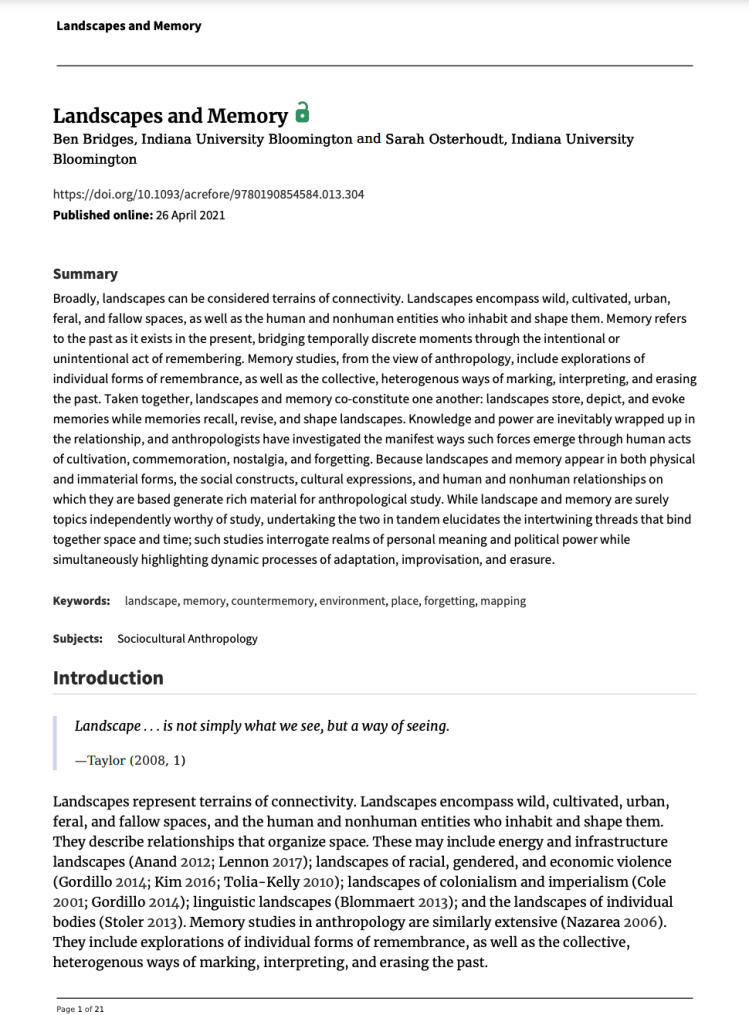
Landscapes and Memory
Broadly, landscapes can be considered terrains of connectivity. Landscapes encompass wild, cultivated, urban, feral, and fallow spaces, as well as the human and nonhuman entities who inhabit and shape them. Memory refers to the past as it exists in the present, bridging temporally discrete moments through the intentional or unintentional act of remembering.
By Ben Bridges and Sarah Osterhoudt
Read the full entry here:
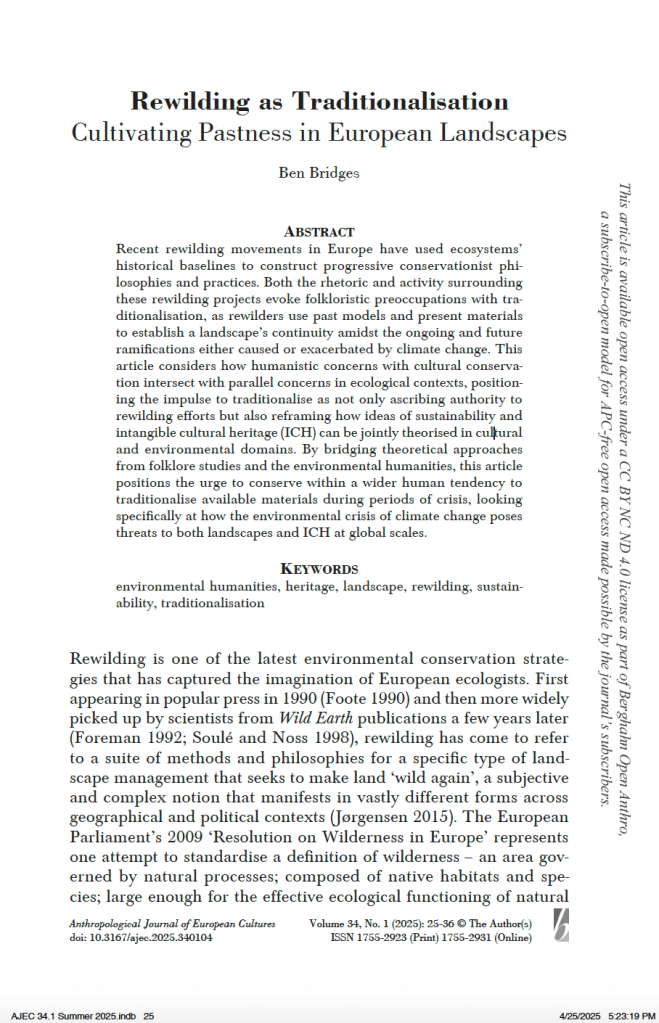
Rewilding as Traditionalisation
This article considers how humanistic concerns with cultural conservation intersect with parallel concerns in ecological contexts, positioning the impulse to traditionalize as not only ascribing authority to rewilding efforts but also reframing how ideas of sustainability and intangible cultural heritage (ICH) can be jointly theorized in cultural and environmental domains.
By Ben Bridges
Read the full entry here:
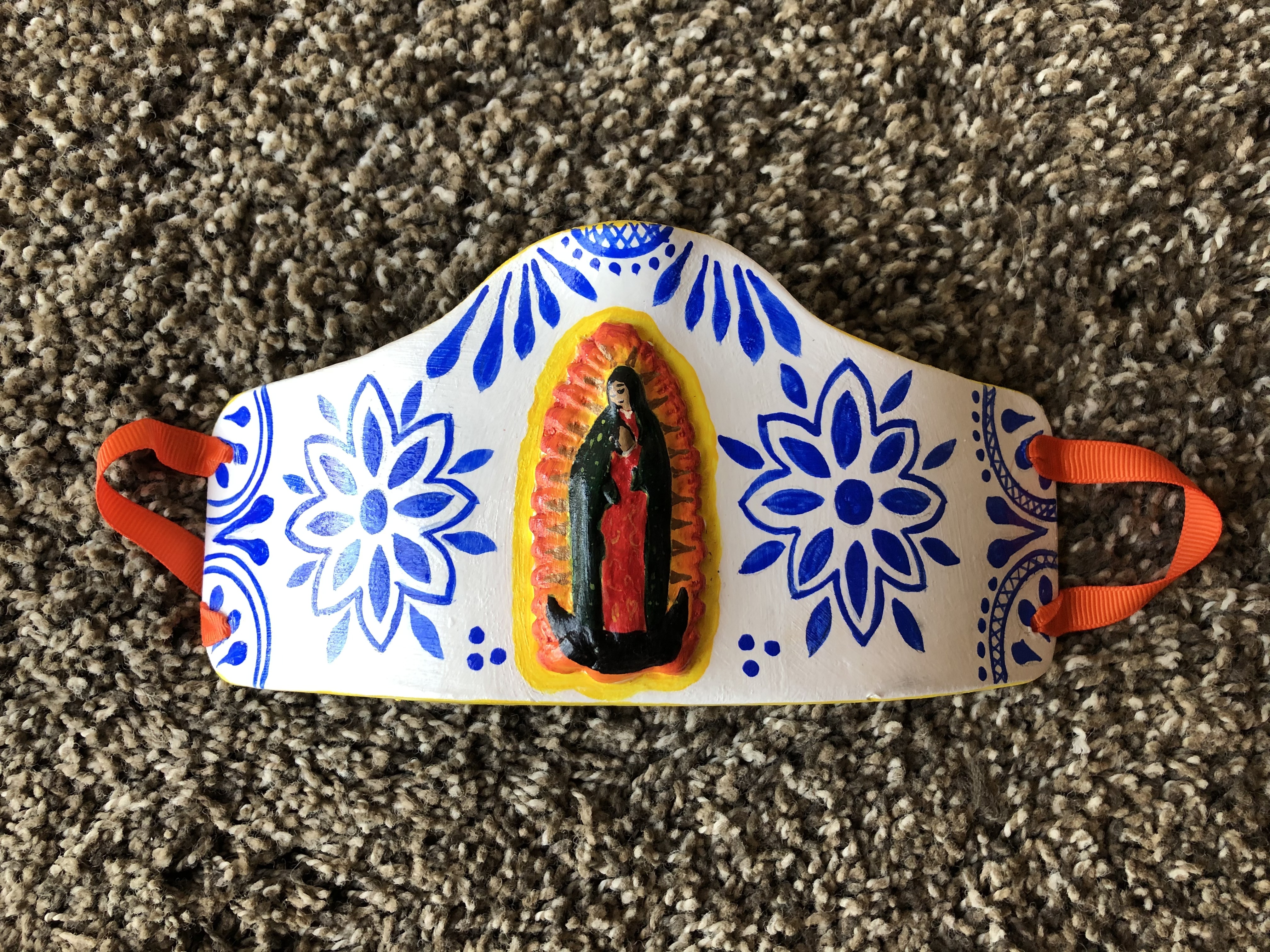
COVID-19 Vernaculars
COVID-19 VERNACULARS || Locked down in our homes and separated from the normal ebb and flow of life, COVID-19 highlights community and creativity, adaptation and flexibility, traditional knowledge, emergence, resistance, and dynamism. In its removal from assumed norms and dailiness, the pandemic provides a moment of insight into the nature of vernacular culture as it is used, abused, celebrated, critiqued, and discarded. The volume I co-edited, Behind the Mask: Vernacular Culture in the Time of COVID, seeks to document this insight, ranging from the emergence of sourdough communities to the exacerbation of racism and economic precarity. The volume was published with Utah State University Press in October 2023 and can be found here.
You can find a selection of my past research presentations on my CV.
 Ben Bridges